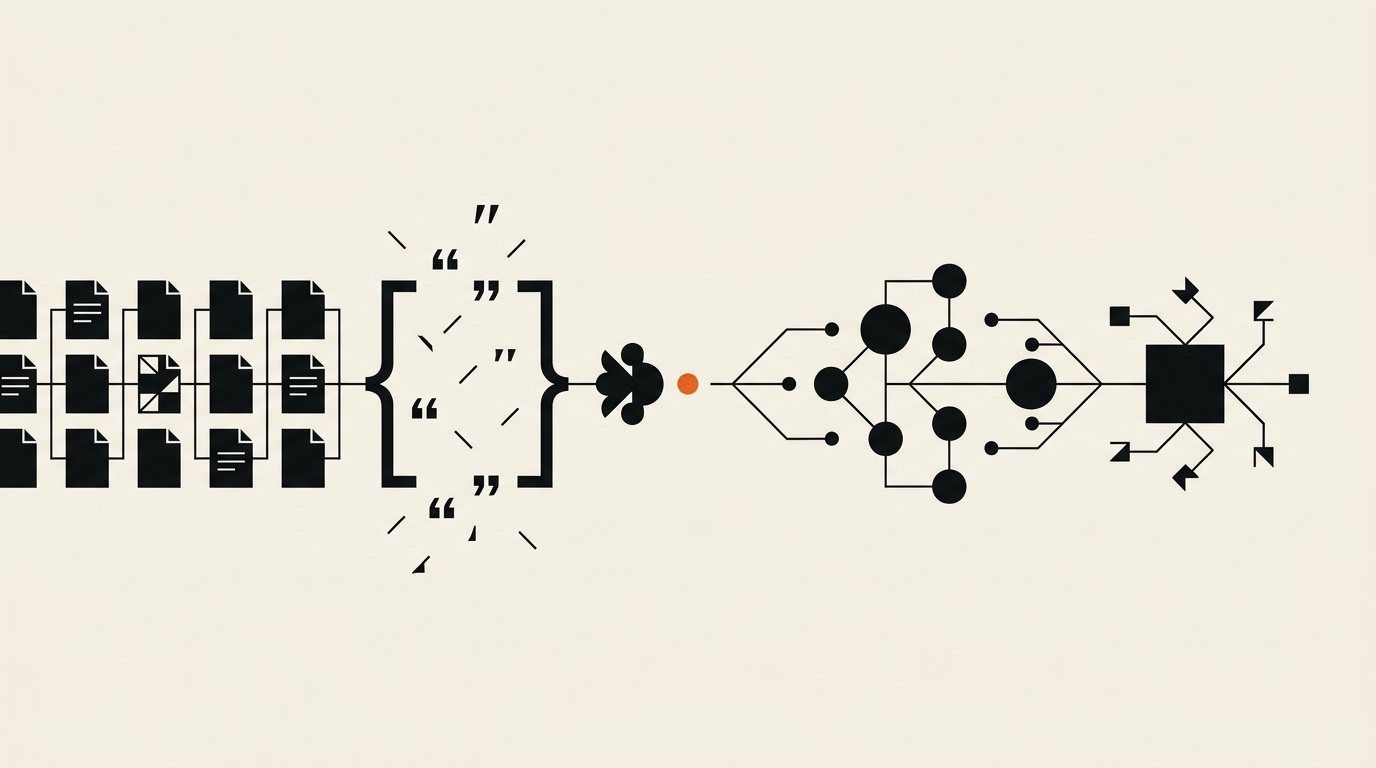
Perplexity and ChatGPT are different engines with different source pipelines. Perplexity grounds every answer in a live web search, drawing from Bing's index, its own crawler, and YouTube. ChatGPT uses its own crawler (OAI-SearchBot) for search-mode answers and strongly favors third-party coverage in credible publications over brand-owned content. Showing up in both requires separate moves, not one universal tactic.
Why They Are Different Problems
Most guides treat "AI search" as a single thing. It is not.
Perplexity is retrieval-first. When you type a question, it searches the live web before generating an answer. Every response is grounded in pages it found right now, which is why the citation links appear inline and send traffic. Perplexity draws primarily on Bing's web index, supplemented by its own PerplexityBot crawler and YouTube transcripts.
ChatGPT has two modes. In default mode, it answers from training data without citing anything. In search mode, triggered by certain query types or user preference, it retrieves live web pages and attaches source links. OpenAI documents a dedicated search crawler called OAI-SearchBot for this purpose. The two crawlers (OAI-SearchBot and GPTBot, used for training) are independent. You can block training without blocking search citations.
The practical consequence: a business can be well-indexed on Google and still be invisible to both engines, because both lean on Bing, not Google.
The Perplexity Playbook
Get into Bing first
Perplexity cannot cite a page that is not in Bing's index. Start at Bing Webmaster Tools and verify your key pages are indexed and crawled recently. Submit your sitemap. Use IndexNow to push new pages immediately after publishing.
Check your robots.txt for any rule that might block Bingbot or PerplexityBot. A single misconfigured line can de-index your most important pages from Bing, and by extension from Perplexity.
Bing introduced AI Performance reporting in early 2026, which shows how often your content is cited in AI-generated answers on Bing and Microsoft Copilot. Set it up and use it. The data is real.
Answer the question in the first sentence
Perplexity's retrieval system scans pages looking for content it can extract as a direct citation. Pages that bury the answer in paragraph six after a long preamble are harder to use. The structure that wins: state the answer in the first one or two sentences, then support it.
The inverted pyramid format from journalism is the right model. Most important information first, supporting detail after. If Perplexity only reads the first two sentences of a section, a well-written page still gives it a complete, citable answer.
Use schema on your FAQ sections
FAQPage schema in JSON-LD markup gives Perplexity machine-readable Q and A pairs it can extract and cite individually. Each question and answer becomes a standalone citable unit, which means one page can be cited multiple times in a single Perplexity response if it contains several distinct answers.
Add datePublished and dateModified to your Article schema as well. Perplexity weights freshness heavily for factual queries. A page last updated in 2023 is at a disadvantage against one updated this month.
Build consistent entity signals
Perplexity cross-references your business name across sources. Inconsistent naming, different descriptions on LinkedIn, Google Business Profile, and your own site, creates ambiguity that makes Perplexity less likely to associate content confidently with your business. Use the same business name, description, and category language everywhere.
Schema.org Organization markup on your homepage declares what the business is and does in machine-readable form. This is not primarily for Google, which has its own entity graph. It is for Bing and Perplexity.
The ChatGPT Playbook
Confirm OAI-SearchBot is allowed
OpenAI documents two separate crawlers at platform.openai.com/docs/bots. OAI-SearchBot handles ChatGPT search citations. GPTBot handles model training. They are independent.
If OAI-SearchBot is blocked in your robots.txt, your pages will not appear in ChatGPT search results, regardless of content quality. Check this before anything else.
Earn third-party coverage
SparkToro's guidance on appearing in AI answers points the same way: the practical move is getting your brand mentioned on the external sites and publications these tools already pull from, not adding more pages to your own domain. Third-party publications carry editorial accountability that your own site cannot replicate, which is part of why a mention on a credible external site tends to do more for your AI visibility than another post you publish yourself.
For a small business, this means: press mentions, industry directory listings, guest bylines where relevant, reviews on G2 or Capterra, and any trade publication coverage of your work. Each piece of third-party coverage is another citation surface.
Wikipedia has outsized weight in ChatGPT specifically. Analysis by Profound of roughly 730,000 cited ChatGPT conversations from late 2025 found Wikipedia to be the single most-referenced domain, appearing in close to one in six conversations that carried a citation. A minimal, accurate Wikipedia entry for your business, if it meets their notability guidelines, is worth the effort for ChatGPT visibility.
Structure pages with answer-first formatting
ChatGPT also favors pages that put the direct answer at the top. A 2026 analysis by Kevin Indig of 3 million ChatGPT responses found that about 44 percent of citations come from the first 30 percent of a page. A strong answer in the opening section, a clear FAQ block, and Article schema with inline citations all improve citation likelihood.
Write facts as standalone sentences. "Joel.design is a Milwaukee web design studio founded in 2010" can be extracted and cited independently. "We have been doing this for a long time" cannot. Specificity is what AI systems can work with.
Check Bing, not just Google
ChatGPT's search mode pulls from Bing's index. An Ahrefs study found that only about 12 percent of the URLs cited by ChatGPT, Gemini, and Copilot rank in Google's top 10 for the same prompt, and ChatGPT specifically sat lower still at around 8 percent. Strong Google rankings are a weak predictor of ChatGPT visibility. Set up Bing Webmaster Tools and monitor Bing indexing separately from your Google Search Console work.
What Both Engines Reward
Despite their differences, Perplexity and ChatGPT share some common preferences:
Direct answers near the top. Both favor pages that answer the question quickly. Long context-setting introductions reduce citation likelihood on both platforms.
Clean crawl access. Pages with slow load times, invasive popups before the content, or broken rendering hurt both. If the content is not visible in HTML to a crawler, it cannot be cited.
Specific, dated facts. Vague claims do not cite well. Named entities, specific numbers, and attributed sources all make content easier to extract and credit. "According to Bing's AI Performance data, our pages were cited 14 times in February 2026" is a citable sentence. "We see good AI traffic" is not.
Updated content. Both engines apply recency weighting for queries where the answer might change over time. Maintaining your most important pages, updating statistics, and marking changes in schema dates is worth the effort.
The Local Business Angle
Local and regional small businesses often assume AI search is a national or enterprise problem. It is not. Buyers in Milwaukee type questions into Perplexity and ChatGPT the same way they used to type them into Google.
The difference is that local content is largely absent from AI citations. The field cited by Perplexity for Milwaukee web design queries is fragmented. No local domain holds dominant share. That is a gap, not a barrier.
The businesses that build clean, specific, answer-first pages now, that are indexed in Bing and have their crawlers properly configured, will own those citation slots before competitors figure out the problem exists.
A website visibility audit covers the exact issues this guide describes, including Bing indexing gaps, robots.txt configuration, schema implementation, and content structure. Reach out if you want a practical look at where your site stands.
Frequently asked questions
- How do I get my business to show up in ChatGPT results?
- ChatGPT pulls from Bing's index when using web search mode. The crawler that handles ChatGPT search results is OAI-SearchBot. Make sure your pages are indexed in Bing, that OAI-SearchBot is not blocked in your robots.txt, and that your pages answer questions directly in the first few sentences. Third-party mentions in credible publications help more than additional pages on your own site.
- Does Perplexity use Google or Bing?
- Perplexity uses Bing as its primary web index, not Google. It also runs its own crawler called PerplexityBot and ingests YouTube transcripts. If your site ranks well on Google but not on Bing, Perplexity may not find it. Submit your sitemap to Bing Webmaster Tools and confirm PerplexityBot is not blocked in your robots.txt.
- Does Google ranking help me show up in ChatGPT or Perplexity?
- Only partially. Both ChatGPT search and Perplexity draw primarily from Bing's index, not Google's. A page that ranks on page one of Google but is poorly indexed in Bing may be invisible to both AI engines. Check your Bing indexing separately. Google ranking helps with Google's own AI Overviews but is not a reliable predictor of ChatGPT or Perplexity citations.
- What kind of content does Perplexity prefer to cite?
- Perplexity favors pages that state a direct answer near the top, use clear headings, and contain specific facts with named sources. Content updated within the past six months has an advantage over older pages. Schema markup, especially FAQPage, helps Perplexity extract individual answers as standalone citable units.
- What is OAI-SearchBot and should I allow it?
- OAI-SearchBot is OpenAI's crawler for ChatGPT search results. If it is blocked in your robots.txt, your site will not appear in ChatGPT search citations regardless of how good your content is. Allowing it is a necessary first step. GPTBot, a separate OpenAI crawler, is used for model training and can be blocked independently without affecting ChatGPT search results.
- How long before my content shows up in AI search results?
- Most practitioners report a two to four week lag from page publication to first AI citations, assuming the page is indexed quickly. Bing has different freshness characteristics than Google, so submitting your sitemap and using IndexNow to push new URLs speeds up the process. Read results on a four-week window. Do not judge a new page in the first week.