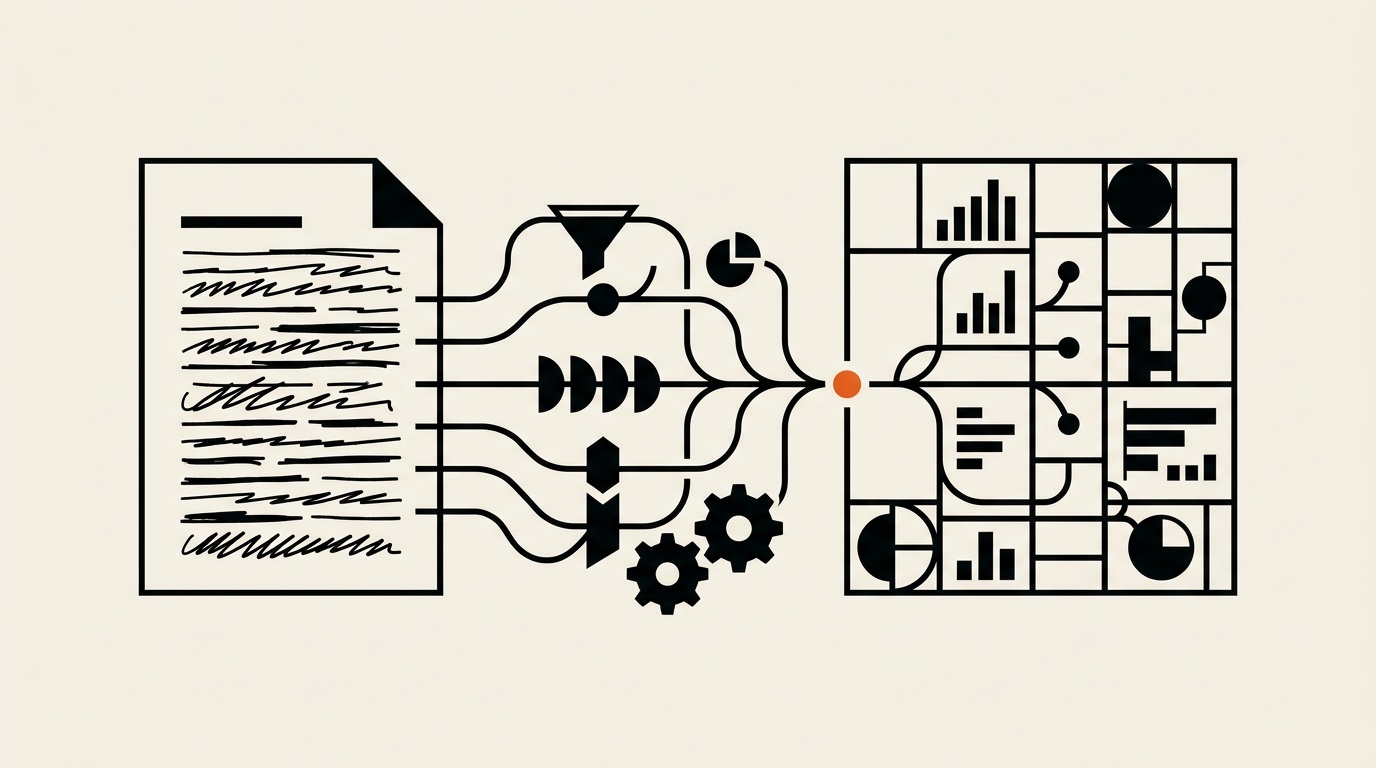
Schema markup is code added to your website that tells search engines and AI tools what your pages actually mean, not just what words appear on them. It translates plain text into structured data a search engine can parse without guessing: business name, service type, location, hours, contact method. That clarity is what makes your pages more useful to Google, and more citable by AI tools like Perplexity and ChatGPT.
What schema markup actually does
Your website has words on it. Search engines read those words and make inferences. Most of the time they get it right. Sometimes they do not, and those misreadings affect how your business appears in search results and AI answers.
Schema markup closes that gap. It adds a layer of structured data, written in a format called JSON-LD, that defines what things are on your page. Not just "we're a plumber" but: this is a LocalBusiness of type Plumber, the address is X, hours are Y, the phone number is Z.
The vocabulary for that structured data comes from Schema.org, a shared standard created by Google, Bing, Yahoo, and Yandex in 2011. When search engines see markup that uses this vocabulary, they do not need to infer. They read.
What it changes in search results
When Google can parse your structured data, your pages become eligible for richer presentation in search results. For local businesses, that means your knowledge panel, the information box that appears when someone searches your business name, is more likely to show accurate hours, location, and contact details.
For service-oriented businesses, it means Google can surface specific services when someone searches for what you do in your area. The page stops being a generic blob of text and becomes a typed, named entity Google can match to specific queries.
Google Search Central documents the requirements for LocalBusiness structured data, including which properties are required and which are recommended. Name and address are required. Phone number, hours, price range, and geographic coordinates are recommended.
The three schema types that matter most for small businesses
Most small business websites need three schema types, in roughly this order of priority.
LocalBusiness. This is the foundational type. It goes on your homepage or your main contact page and establishes your business as a real, located entity with specific attributes. Use the most specific subtype that fits: Restaurant, Dentist, HairSalon, LegalService, HomeAndConstructionBusiness, and so on. Schema.org defines dozens of LocalBusiness subtypes, with more nested underneath them. The more specific your type, the more clearly Google understands what you do.
Service. If you have individual pages for specific services, Service schema marks each one with a name, description, and area served. A Milwaukee web designer with separate pages for branding, web design, and AI automation can mark each one distinctly. This helps Google match each page to more specific queries rather than routing everything through the homepage.
FAQPage. If your site includes a section of answered questions, FAQPage schema marks them up for search engines and AI tools. One note here: Google currently shows FAQ rich results (the expanded accordion in search) mainly for government and health websites. For all other sites, the rich result display is limited. That does not make the markup useless. AI tools still use structured question-and-answer data to build accurate answers, and the semantic clarity helps Google understand what your page covers.
Why this matters for AI search specifically
When someone asks ChatGPT, Perplexity, or Google's AI overview which Milwaukee web designer to hire, those systems pull from pages they have indexed and understood. Pages with clear structured data give AI tools a more accurate, machine-readable description of the business.
A page without schema markup requires the AI to infer: "This seems to be a web designer based in Milwaukee based on the text." A page with LocalBusiness and Service schema tells the AI directly: this is a ProfessionalService named joel.design, located in Milwaukee, WI, offering web design and brand identity services.
The difference matters because AI tools are increasingly the first answer people see. Being clearly described is a prerequisite for being accurately cited.
What it does not do
Schema markup does not directly improve your search ranking. Google has been explicit about this. It is not a ranking signal in the way that backlinks or page authority are.
What it does is improve the accuracy and richness of how your pages are represented. That representation affects click-through rates, knowledge panel accuracy, AI citation likelihood, and the overall clarity of your online presence. Those outcomes compound. They are just slower and less direct than ranking factors.
Schema markup also does not fix a weak page. If your services page is vague about what you do and where you do it, adding schema markup to it will not compensate for that. Structured data works best when it describes specific, accurate content that already exists on the page.
How to check if your site already has it
Google's Rich Results Test at search.google.com/test/rich-results lets you paste any URL and see what structured data Google finds on that page, whether it passes validation, and which rich result types it is eligible for.
Most WordPress sites with Yoast SEO or Rank Math installed have some basic schema in place. The question is whether it is accurate: right business type, correct address and hours, real phone number. Plugins generate schema from your settings, and those settings are only as good as whoever filled them in.
For most small business sites, a basic audit of existing structured data takes about 30 minutes and often surfaces gaps: wrong business type, missing hours, no Service markup on service pages, address that does not match the Google Business Profile. Those inconsistencies are worth fixing.
What to do next
If you are not sure what structured data your site has, or whether what is there is accurate, a site audit is the fastest way to find out. It reads what is actually on your pages, flags the wrong business types and missing markup, and tells you exactly what to fix.
*A website audit is the fastest way to see where your structured data stands and what is missing.*
Frequently asked questions
- Does schema markup help my Google ranking?
- Schema markup is not a direct ranking factor, per Google. What it does is help search engines and AI tools understand your pages accurately. That accurate understanding can lead to richer results in search, which tend to get more clicks. The indirect effect on visibility is real. The direct ranking boost is not.
- What schema types matter most for a small local business?
- Start with LocalBusiness schema on your homepage or contact page. It tells Google your name, address, phone number, and hours in a structured format. If you offer services, add Service schema to individual service pages. If your site has a questions-and-answers section, FAQPage schema marks it up for AI and search engines.
- Does my website already have schema markup?
- Most template-built sites include some basic schema by default, but it is often incomplete or incorrect. You can check any page using Google's Rich Results Test at search.google.com/test/rich-results. Paste your URL and see what structured data Google finds, and whether it passes validation.
- Do I need to know how to code to add schema markup?
- Not necessarily. Schema markup is added as a JSON-LD code block in your site's HTML, usually in the head section. If you use WordPress, plugins like Yoast SEO or Rank Math can generate and insert basic schema automatically. For more specific or accurate markup, a developer who knows your business is faster and more reliable than a plugin guessing at your content.
- What is the difference between LocalBusiness schema and Google Business Profile?
- Google Business Profile is a separate listing on Google's platform. Schema markup lives on your own website. They serve related purposes but are not the same thing. Your GBP tells Google about your business through Google's own system. Schema markup tells Google about your website directly. Having both, and keeping the details consistent between them, gives search engines a clearer and more trustworthy picture of your business.
- Will schema markup help AI tools like ChatGPT or Perplexity mention my business?
- Structured data helps AI systems understand what your pages are about, which makes it easier for those systems to pull accurate information about you when answering a relevant question. It is not a guarantee of being cited, but it reduces the chance of AI misrepresenting or ignoring your business. Accurate, well-structured pages are more citable than vague ones.